 Trending ⋮
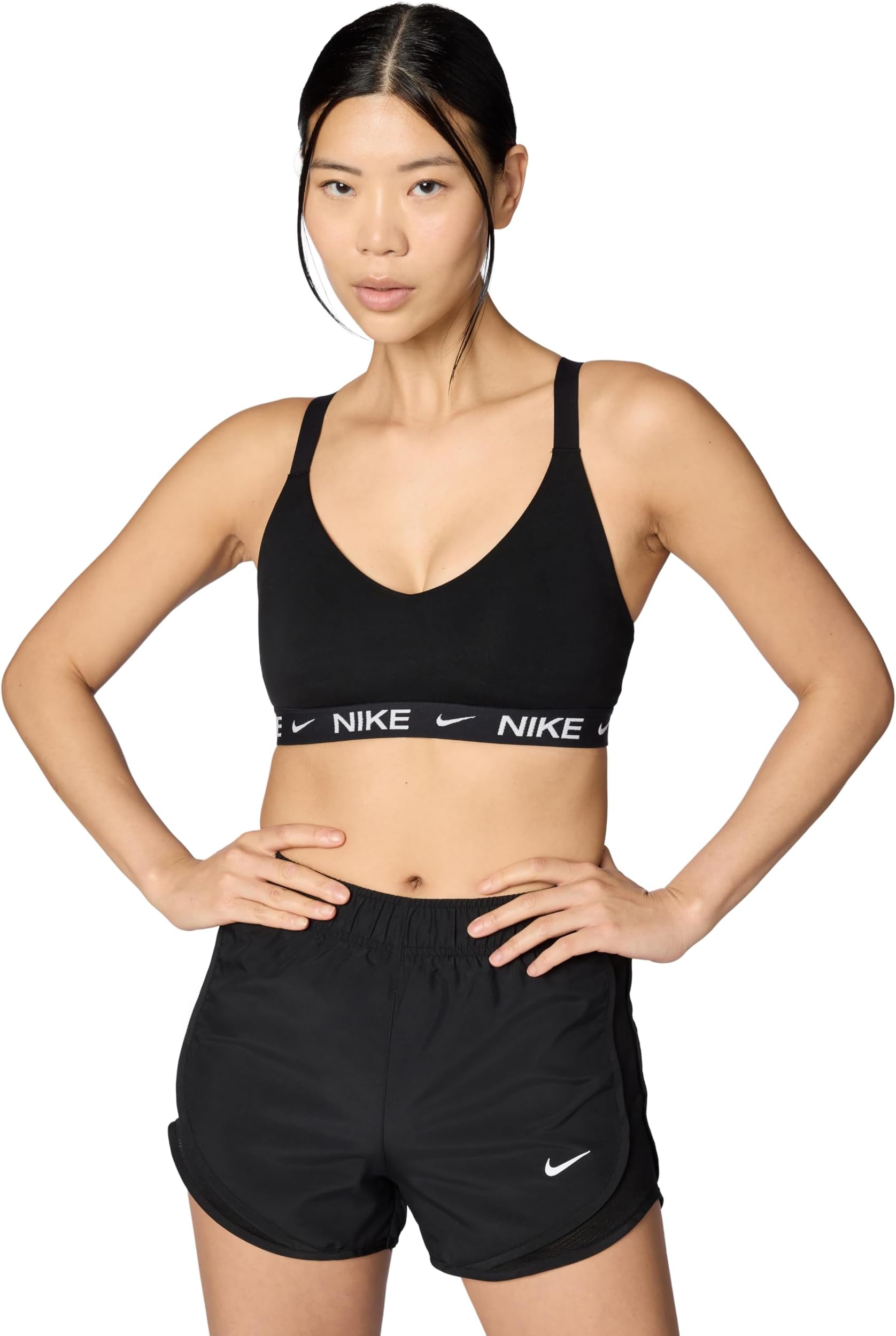
 Get the Nike Women's Indy Sports Bra, • — Image of Nike Women's Indy Sports Bra — [Take a look]
Visit this page.
The Scaffolding of Movement
The history of specialized undergarments designed for physical exertion is riddled with engineering mishaps and compromises exacted by societal expectation. Before the advent of true athletic support, women engaging in rigorous activity faced a painful choice: the stiff, whalebone stricture of a standard corset, which restricted breath and movement, or the use of loosely structured minimization garments that offered negligible practical support. The great bicycling boom of the late 19th century forced the issue; sudden movement demanded liberation from the cage of the traditional stays. Early designs, such as the rudimentary *brassière* adopted around the turn of the century, were primarily concerned with minimizing projection under light clothing, not absorbing the shock of running or leaping. They bound. They did not secure. The fabric often chafed.
A confusing multitude of elastic and cloth contraptions emerged in the 1910s and 1920s, each promising relief but delivering only varied degrees of discomfort. These garments, often constructed from heavy canvas or cotton duck, failed rapidly once elasticity—a new and temperamental material—was introduced and subsequently failed under stress and sweat. One notable attempt involved the ‘athletic brassiere,’ which sometimes resembled nothing so much as a modified torso-binder, forcing the bust against the chest wall. The sheer misery of performance in these structures speaks to the earnest dedication of early female competitors.
An Accidental Solution
True innovation often springs from necessity and an unusual collection of materials at hand. Decades passed with stopgap measures and poor designs before the fundamental principle of containment—not minimization—was successfully applied to high-impact wear. In the late 1970s, three American women—Lisa Lindahl, Hinda Miller, and Polly Smith—found their initial support solutions wanting while preparing for athletic competition. The conventional bra’s straps slipped; the structure failed. They needed a design that anchored the mechanism of support to the shoulders and the rib cage, distributing the load laterally instead of vertically.
The resulting prototype remains an iconic, if peculiar, piece of design history. Their initial model, famously dubbed the "Jockbra," was constructed by sewing two men's athletic supporters (jockstraps) together. This odd marriage of materials provided the sturdy, cross-shoulder support necessary for high-impact activity. The subsequent mass-produced version, renamed the "Jogbra," was not elegant; it was robust. It used the wide, stabilizing elastic bands familiar in men’s athletic wear, repurposing a historically male design philosophy for a uniquely female requirement. It was heavy, and occasionally restrictive, yet it represented a profound, functional shift away from fashion dictates and toward biomechanical necessity. That unexpected pivot—two jockstraps yielding a breakthrough garment—highlighted how the industry had failed to grasp the mechanical problems presented by movement for so long.
Get It On Amazon ::: (brought to you by Kiitn)
▷ Visit this page.
Quick look Nike Women's Indy Sports Bra 4.3 4.3 out of 5 stars 25 4.3 out of 5 stars. 25 customer reviews $ 42 . 00 Add to Cart
#Ad Our articles include affiliate links: If you buy something through a link, we may earn a commission 💕
[ Purchase Options ]


No comments:
Post a Comment